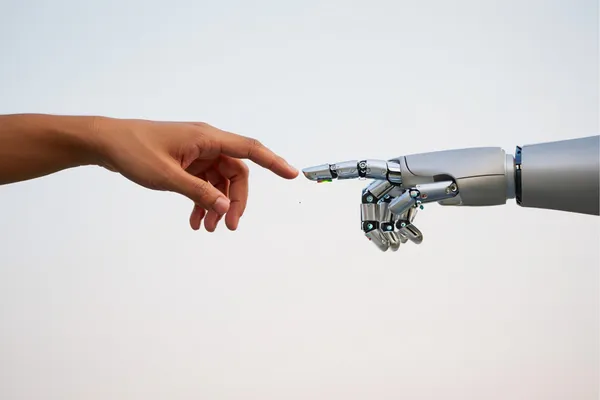
The AI-Proof Professional: 3 Soft Skills No Algorithm Can Replicate
AI is reshaping industries—but the most future-proof professionals aren’t the ones who code best. They’re the ones who master what machines can’t.
The AI Career Crisis (And Why Soft Skills Are Your Lifeline)
Artificial intelligence is automating tasks at an unprecedented pace. McKinsey estimates that 30% of work hours across the U.S. economy could be automated by 2030. Chatbots write emails, AI generates reports, and algorithms now handle customer service, data analysis, and even creative work like ad copy and graphic design.
Yet, despite this seismic shift, one truth remains unshaken: The most valuable professionals aren’t those who compete with AI—they’re those who do what AI can’t.
While technical skills get you in the door, soft skills keep you irreplaceable. And in an era where AI is commoditizing expertise, three soft skills stand out as unautomatable, high-leverage superpowers:
Complex Problem-Solving in Ambiguity
High-Level Emotional Intelligence (Beyond Empathy Bots)
Holding Space for Human Connection
Let’s break down why these skills are AI-proof—and how to cultivate them before the next wave of disruption hits.
1. Complex Problem-Solving in Ambiguity (The Anti-Algorithm Skill)
Why AI Struggles: AI excels at structured problems—tasks with clear inputs, rules, and outputs. Need to analyze a dataset? AI crushes it. Need to optimize a supply chain? Algorithms win.
But real-world problems are messy. They involve:
Incomplete data(e.g., a client’s unspoken fears in a negotiation)
Competing priorities(e.g., balancing ethics, profit, and team morale)
Unpredictable human factors(e.g., office politics, cultural nuances)
AI can suggest solutions, but it can’t navigate the gray areas where judgment, intuition, and creativity collide.
How to Develop It:
✅ Practice "First-Principles Thinking" – Break problems down to their fundamental truths (like Elon Musk designing SpaceX rockets from physics up, not industry norms).
✅ Embrace "Anti-Fragile" Decision-Making – Instead of avoiding uncertainty, lean into it. Ask: "What’s the worst that could happen, and how would I adapt?"
✅ Play "Devil’s Advocate" with AI – Use tools like ChatGPT to generate solutions, then stress-test them with human insight.
Example: A marketing team uses AI to generate ad copy—but the campaign flops because the algorithm missed cultural sensitivities. The AI-proof professional spots the gap, adjusts the messaging, and turns failure into a viral win.
2. High-Level Emotional Intelligence (Beyond Empathy Bots)
Why AI Struggles: AI can simulate empathy ("I’m sorry you’re feeling this way…"), but it doesn’t truly understand human emotions. It lacks:
Genuine emotional resonance(e.g., sensing when a colleague is burned out but won’t admit it)
Contextual awareness(e.g., knowing when to push a team vs. when to ease up)
Moral nuance(e.g., deciding whether to fire an under performing but loyal employee)
How to Develop It:
✅ Master "Emotional Granularity" – Expand your vocabulary for emotions (e.g., not just "stressed" but "overwhelmed by imposter syndrome").
✅ Practice "Deep Listening" – Most people listen to respond. AI-proof professionals listen to understand—pausing, reflecting, and asking "What’s not being said?"
✅ Use the "5-Second Empathy Check" – Before responding in a high-stakes conversation, ask: "How would I feel if I were them?"
Example: A manager uses AI to track team productivity—but notices one employee’s output drops. Instead of relying on data alone, they have a real conversation, discover a family crisis, and adjust workloads without losing trust or performance.
3. Holding Space for Human Connection (The Ultimate AI Moat)
Why AI Struggles: AI can facilitate connections (e.g., LinkedIn suggestions, Zoom calls), but it can’t create meaningful ones. Humans crave:
Authentic vulnerability(e.g., a leader admitting,"I don’t have all the answers—let’s figure this out together")
Shared energy(e.g., the buzz of a brainstorming session where ideas build on each other)
Rituals and trust(e.g., inside jokes, team traditions, unspoken bonds)
How to Develop It:
✅ Design "High-Touch" Moments – In a remote world, intentionally create spaces for connection (e.g., virtual coffee chats, "no-agenda" meetings).
✅ Lead with Storytelling – Facts tell, but stories sell—and connect. Use narratives to make data memorable and emotions tangible.
✅ Be the "Human Glue" – Notice when teams fragment and actively bridge gaps (e.g., "Hey, I heard you both working on similar challenges—let’s sync").
Example: A sales team uses AI to personalize pitches—but closing rates stall. The AI-proof professional hosts a live Q&A, builds rapport, and turns cold leads into loyal clients because they felt seen.
The AI-Proof Career Playbook: How to Future-Proof Yourself
Step 1: Audit Your "Unautomatable" Skills
Ask:
Where do I add value that AI can’t?
What problems require my human judgment?
Who trusts me because of how I make them feel?
Step 2: Double Down on "Human-Led" Work
Pair AI with intuition(e.g., use AI for research, but you craft the strategy).
Own the "last mile"(e.g., AI drafts a report—you present it with storytelling).
Specialize in transition zones(e.g., onboarding clients, resolving conflicts, leading culture shifts).
Step 3: Build Your "Soft Skills Stack"
Skill Tactics to Improve AI-Proof Outcome
Complex Problem-Solving First-principles thinking, scenario planning Become the "go-to" for ambiguous challenges
Emotional Intelligence Deep listening, emotional granularity Lead teams through change without burnout
Holding Space Storytelling, ritual-building, Create loyalty that high-touch moments algorithms can’t replicate
The Bottom Line: AI Can’t Replace What Makes You Human
The professionals who thrive in the AI era won’t be the ones who compete with machines—they’ll be the ones who leverage machines to amplify their humanity.
Your action plan:
Identify one "unautomatable" skill to develop this month.
Use AI as a sparring partner—let it handle the repetitive, while you focus on the nuanced and relational.
Become the person who makes others feel understood, inspired, and connected—because that’s what no algorithm can code.
The future of work isn’t human vs. machine. It’s human with machine—and the humans who master the irreplaceable will lead the way.